
September 15, 2026
Executive Summary
Affordable housing, both naturally occurring and subsidized, is a large asset class that has experienced significant growth in investor interest in recent years.
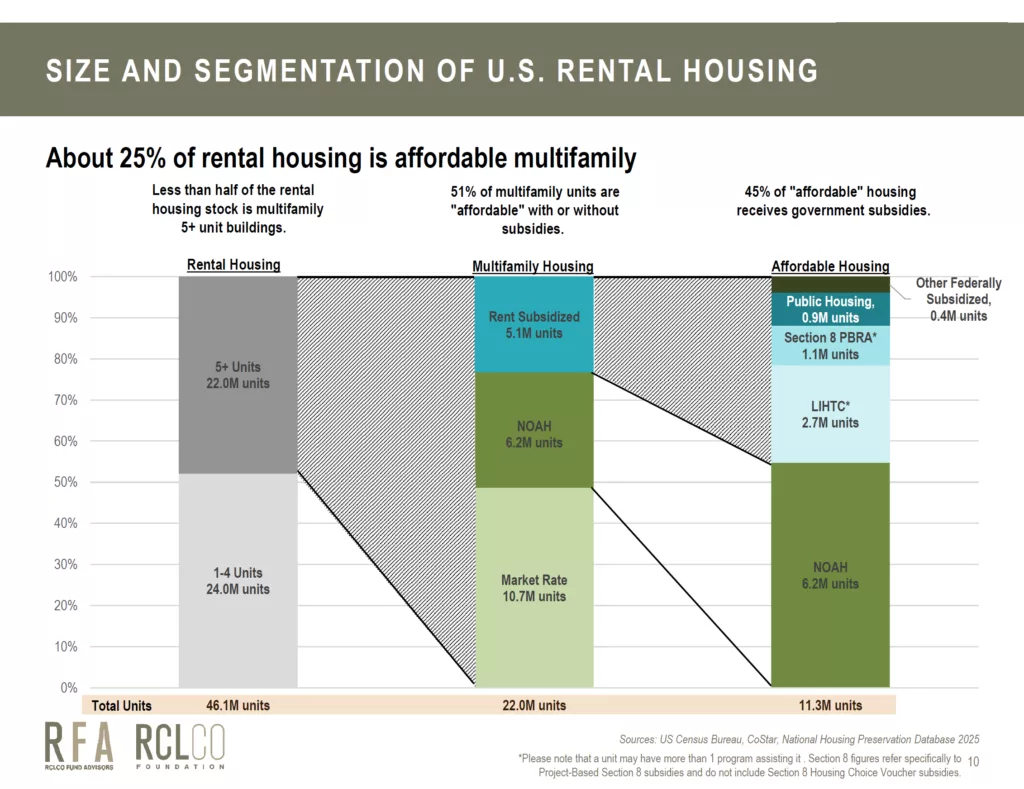
- Approximately 51% of the nation’s 22.0M units of multifamily rental housing can be classified as “affordable,” of which over half are naturally-occurring affordable housing (of low quality but unsubsidized), and approximately 45% are subsidized through a government program.
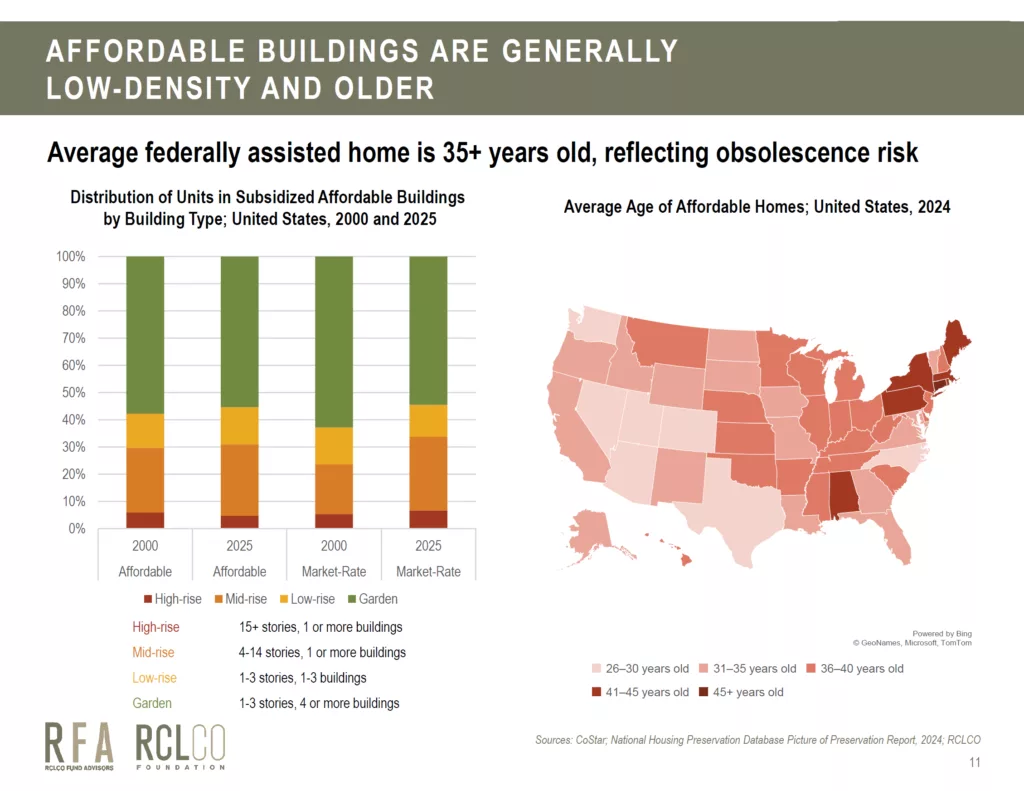
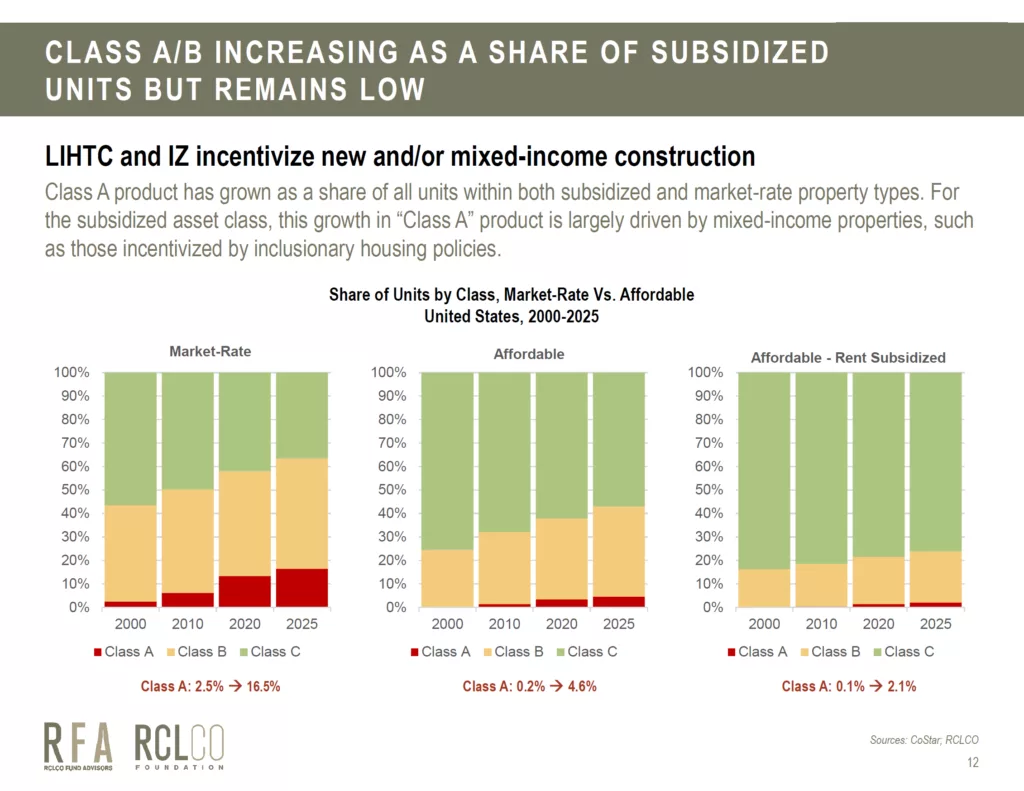
- Affordable apartments are generally lower density, lower quality, and older than market-rate.
- Whether subsidized or not, affordability is generally defined as rents not exceeding HUD’s threshold of 30% of income paid in rent for households at or below 60-80% of area median income (AMI).
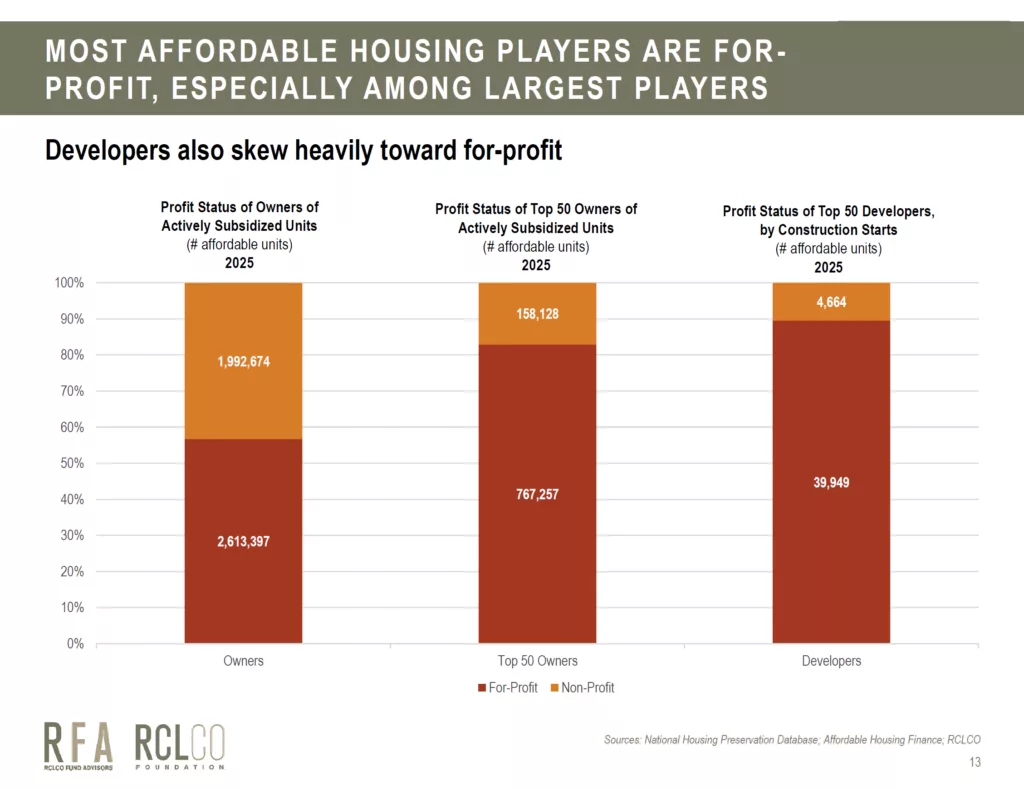
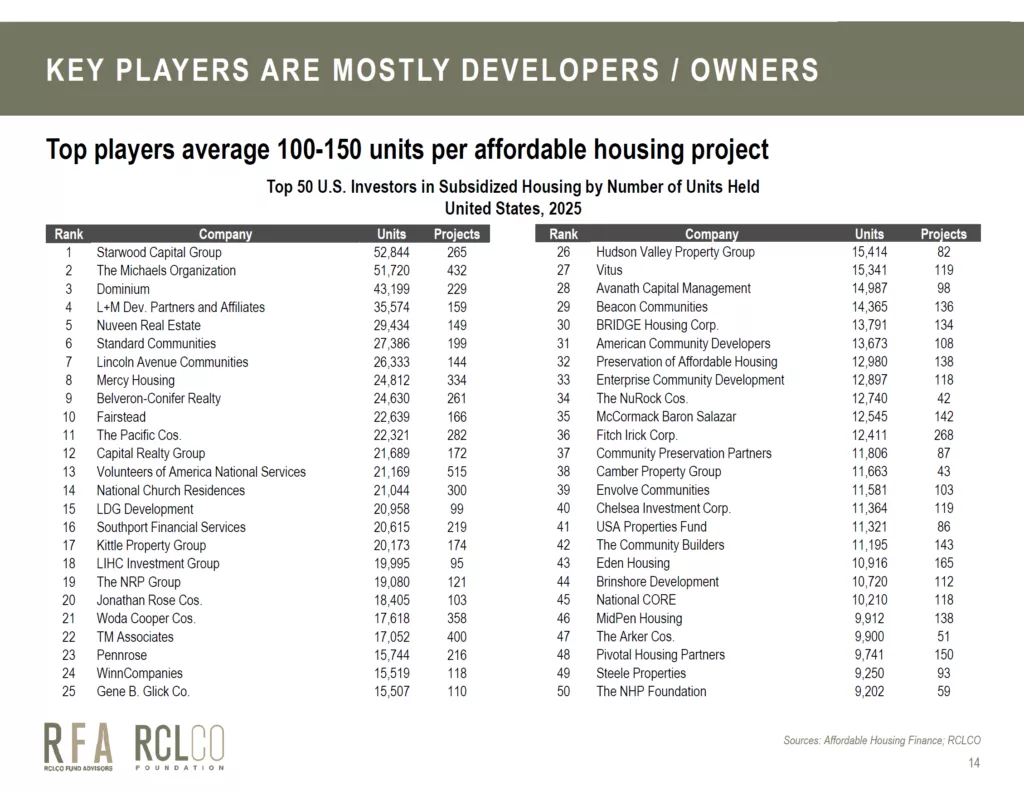
- Affordable housing ownership is dominated by for-profit entities, with well over half of owners, managers, and developers being for-profit.
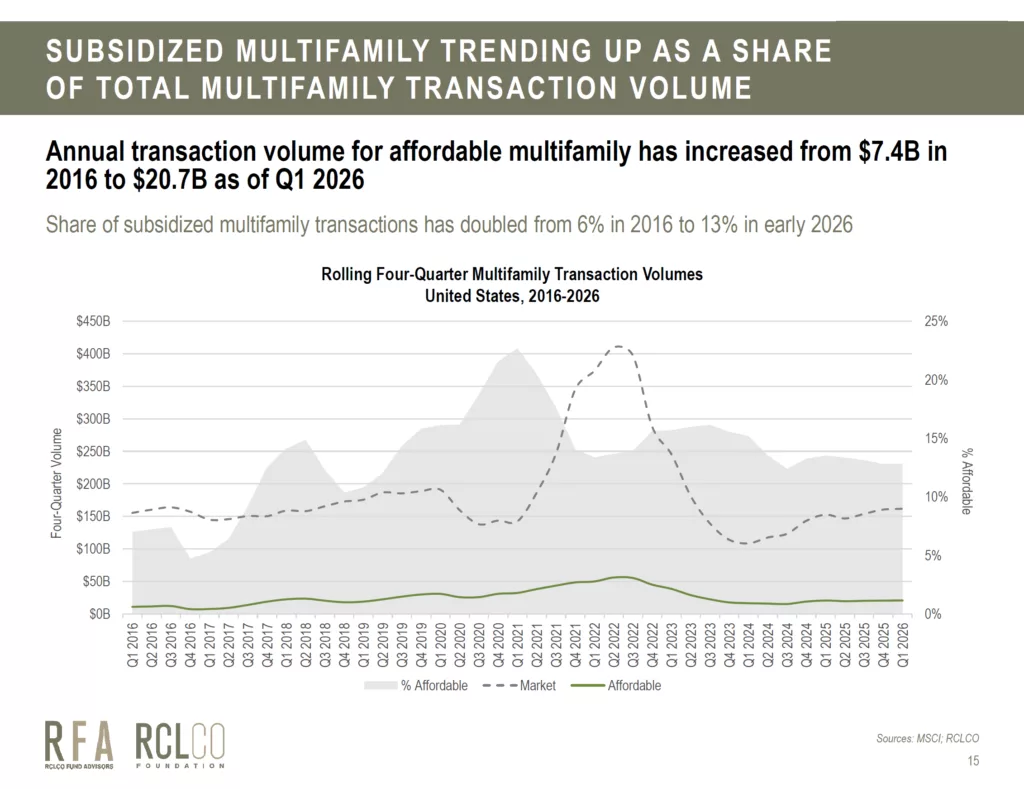
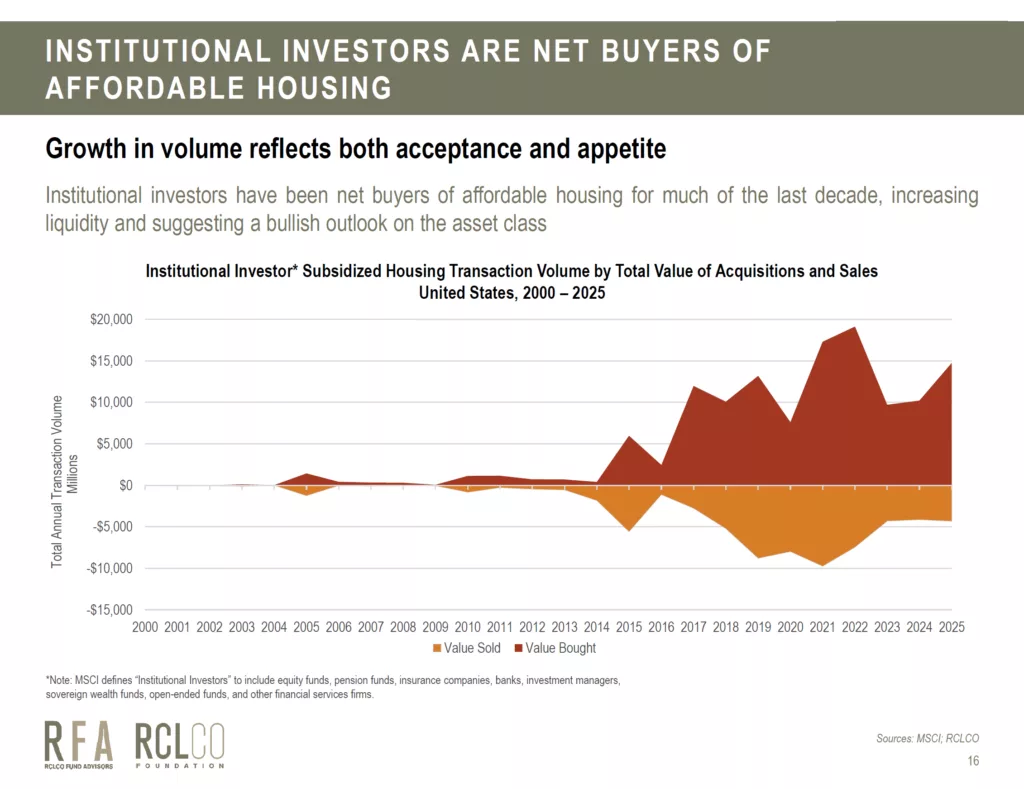
- Institutional investors have been net buyers of affordable housing for much of the last decade, and affordable transactions comprise a growing share of overall apartment transactions as the asset class institutionalizes.
Demand for affordable rental housing continues to grow in an increasingly supply-constrained market environment. These fundamentals support the continued attractiveness of investment in the affordable asset class.
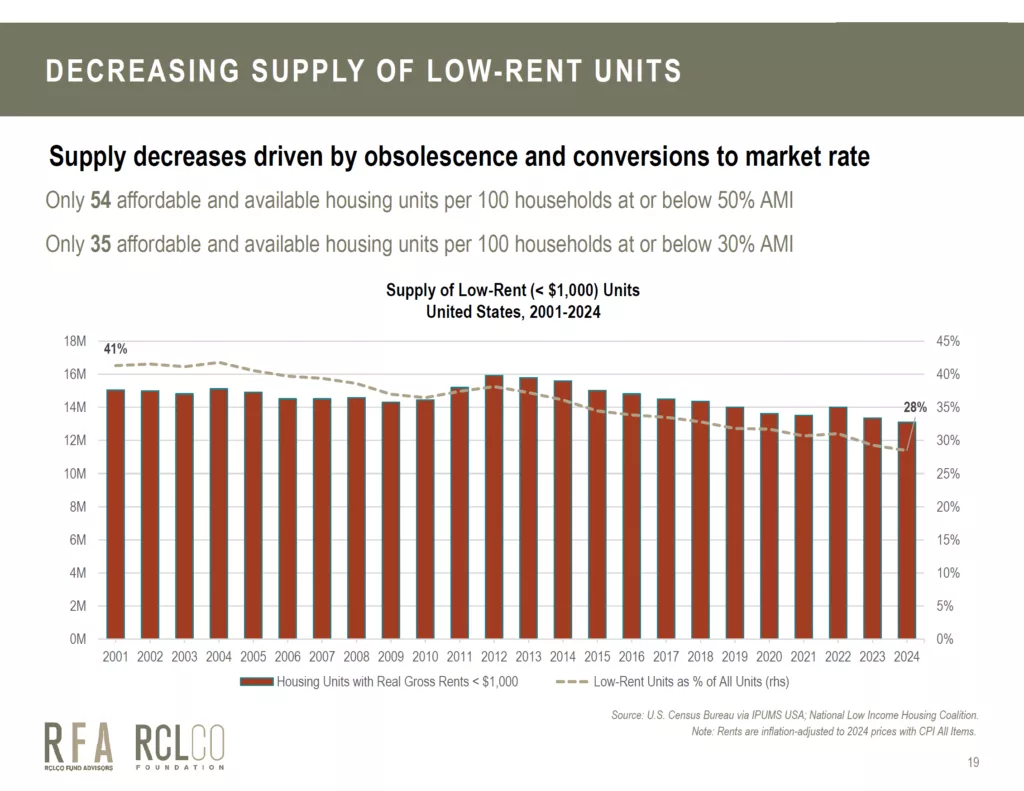
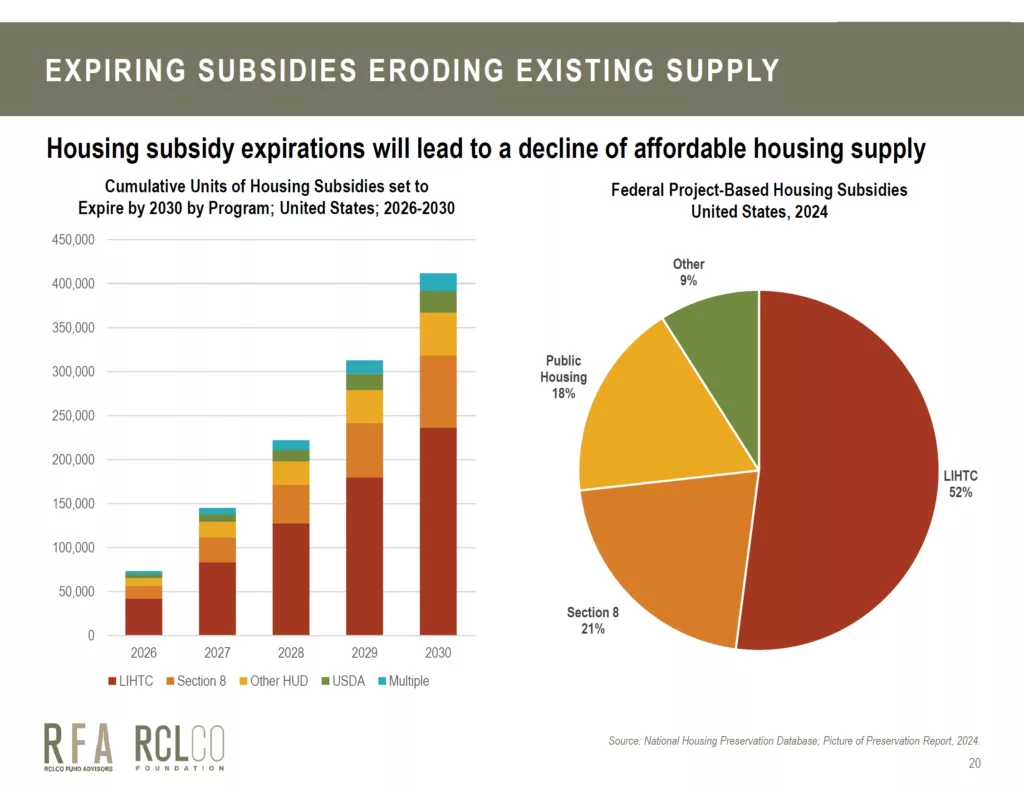
- The supply of low-rent units has declined in the U.S., and expiring federal subsidies further constrain the already low supply of affordable housing.
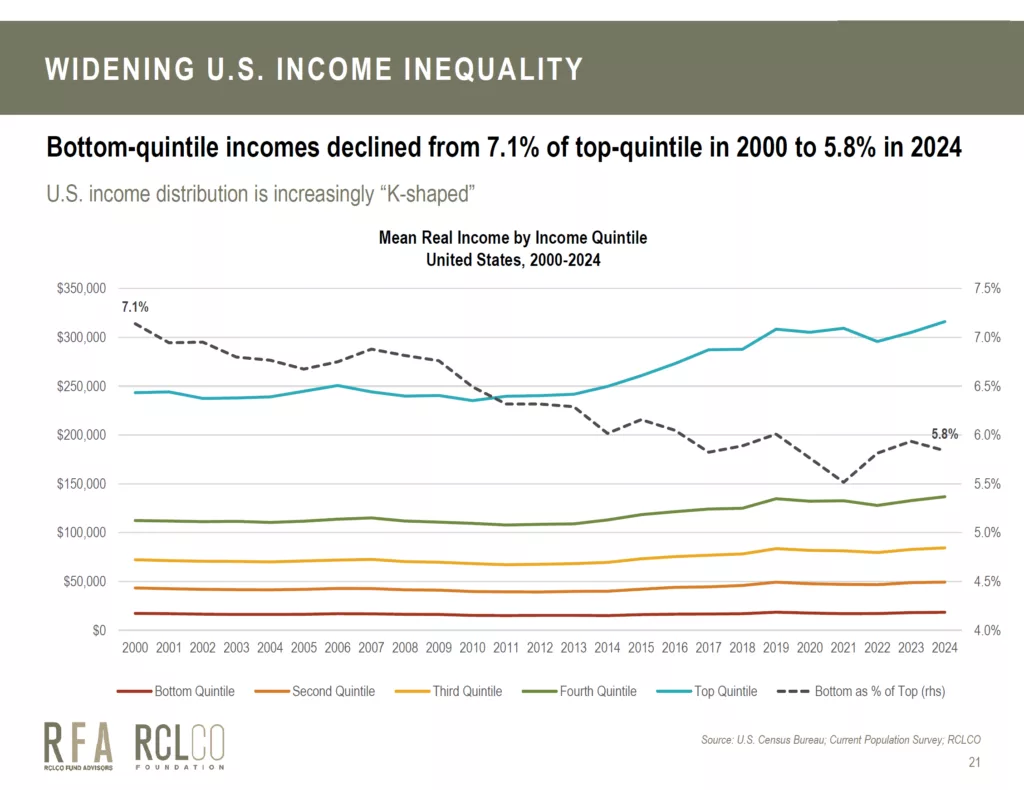
- Affordable housing has significant pent-up demand, particularly as income inequality continues to widen in the U.S., leaving households in the bottom quintiles of the income distribution with few housing options.
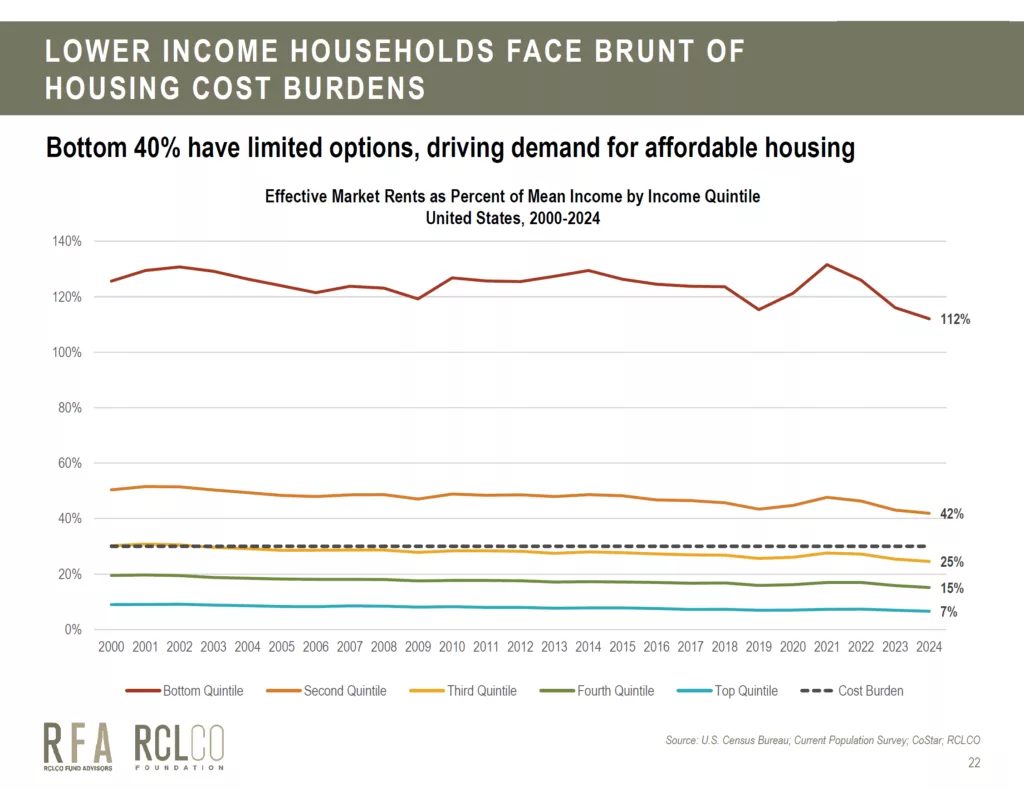
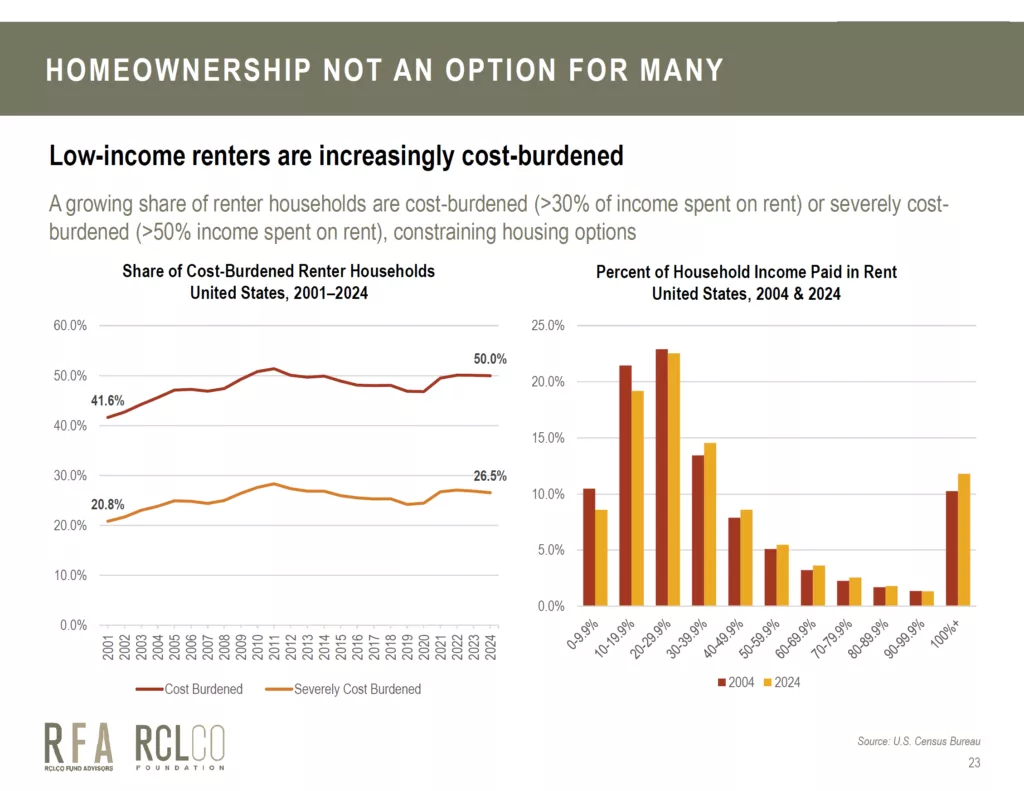
- Relatedly, increasing renter cost burdens drive continued demand for affordable housing.
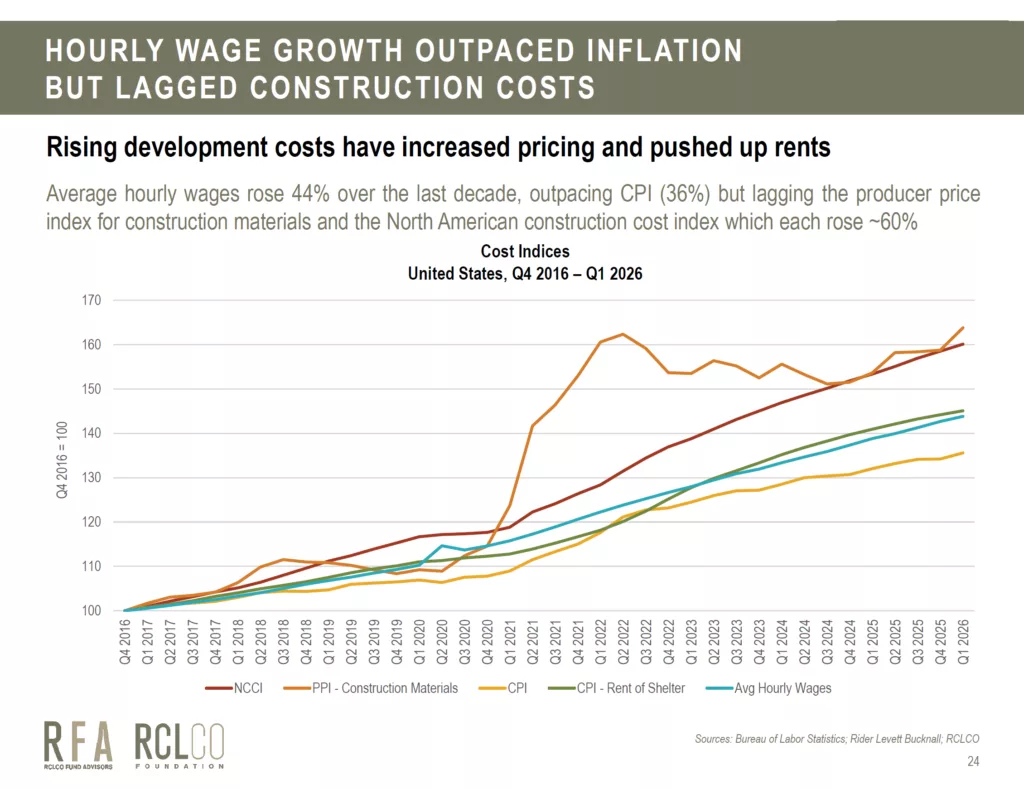
- Historical and projected trends in housing costs and wage growth indicate a persistent and pervasive need for affordable housing.
- Additionally, affordable housing has intrinsic social benefits, allowing investors to support the communities in which they operate.
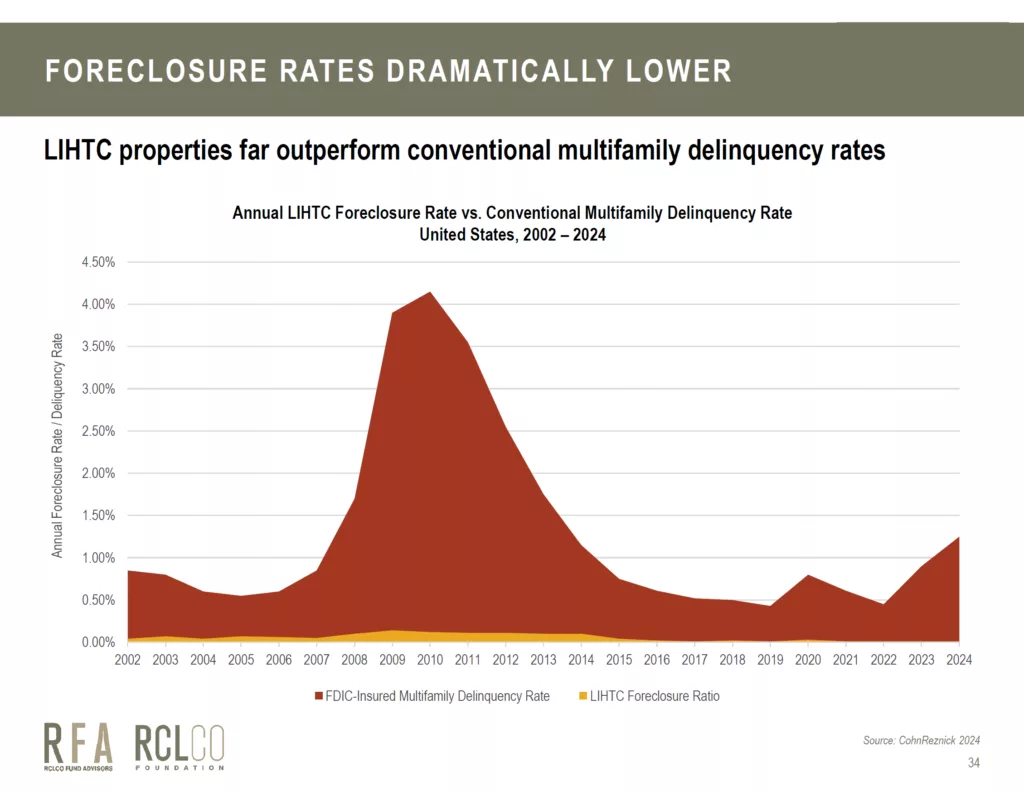
The favorable supply-demand imbalance in affordable housing has led to consistently strong performance with greater resilience in downturns.
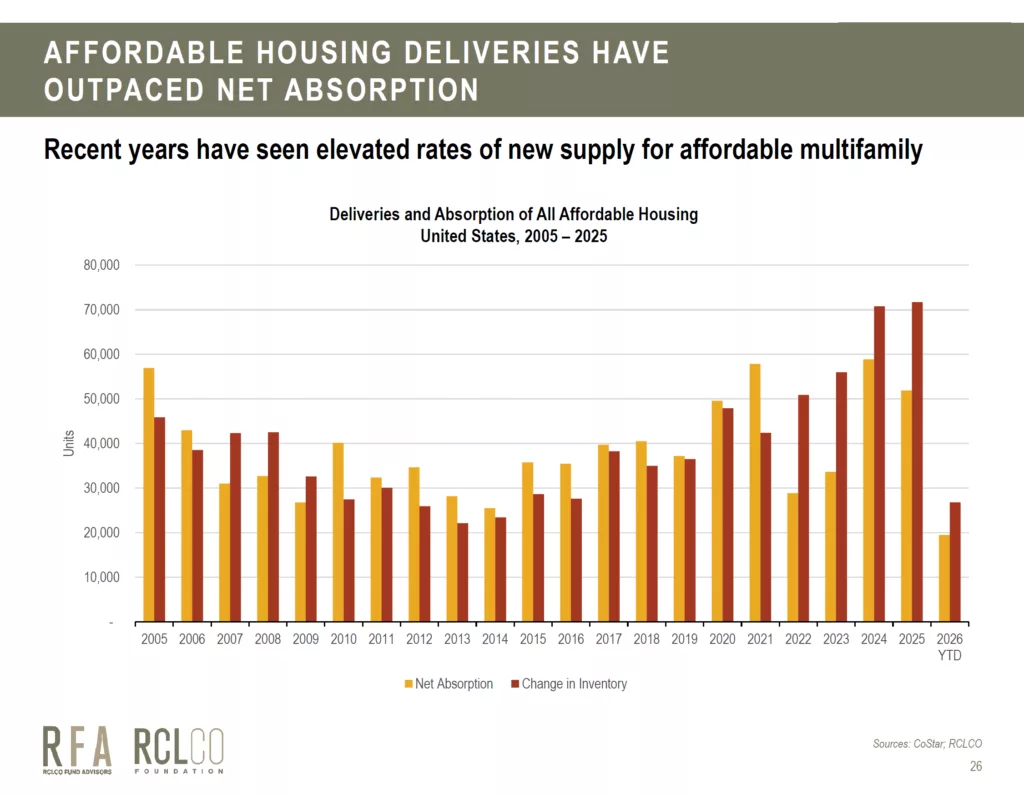
- The recent supply wave in the apartment market at large has also affected affordable housing. Completions outpaced net absorption in recent years, and fundamentals moderated somewhat.
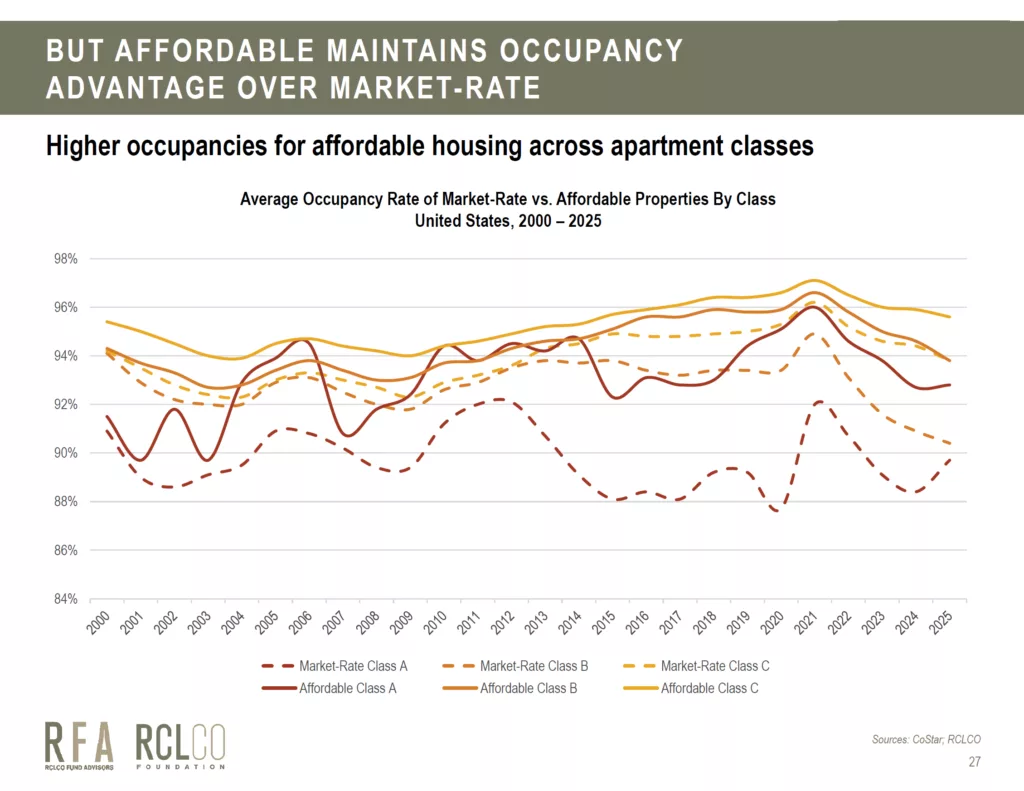
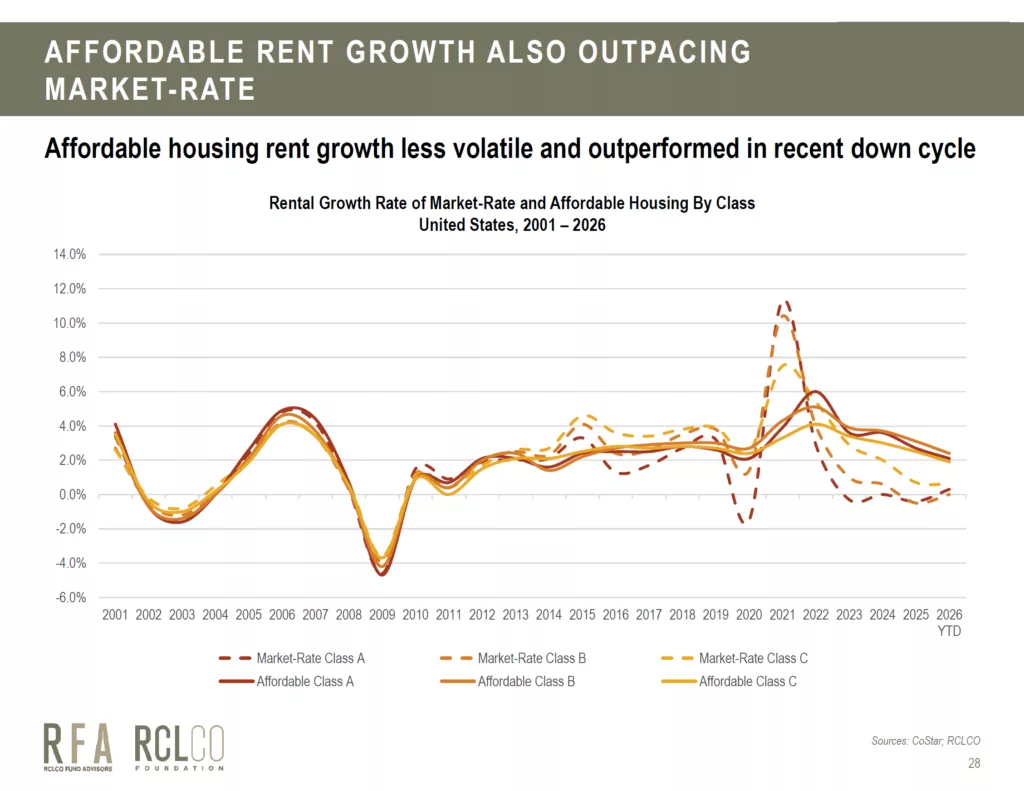
- However, affordable housing operating fundamentals continued to outperform market-rate fundamentals in the recent down cycle. Affordable housing consistently demonstrates higher occupancies and more resilient rent growth than market-rate properties.
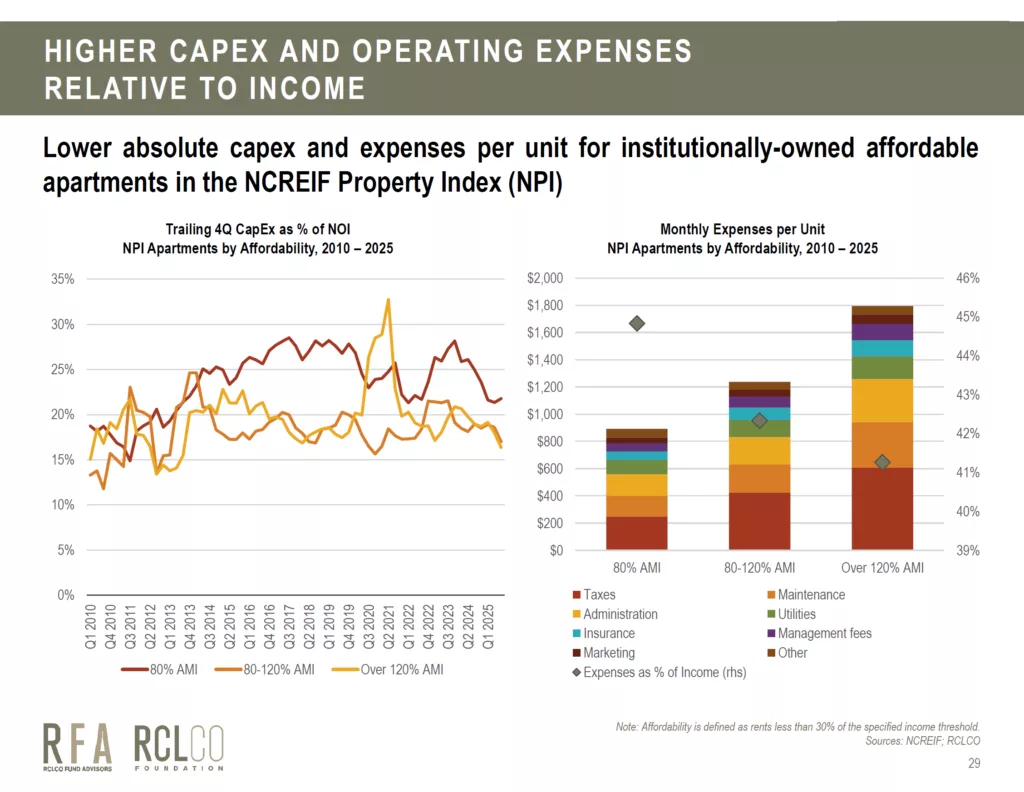
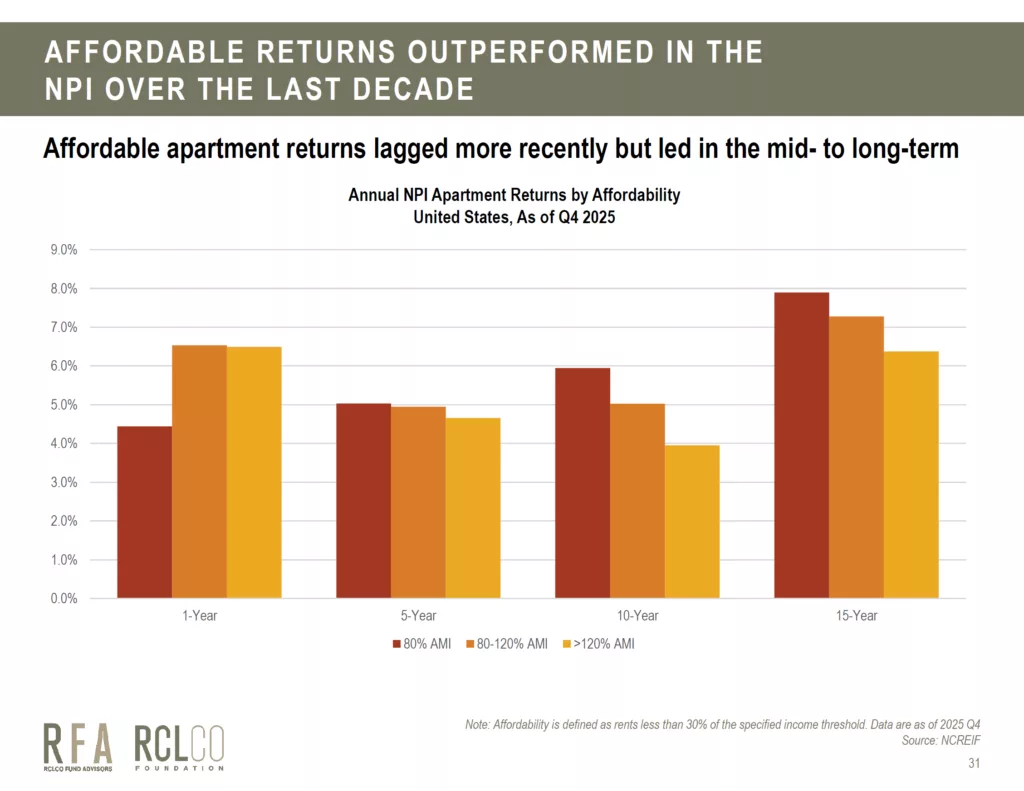
- For institutional-quality apartments in the NPI, capital expenditures and operating expenses are lower for affordable properties in absolute terms but are higher relative to incomes. Notably, total returns for affordable housing are higher than market-rate returns in the mid- to long-term.
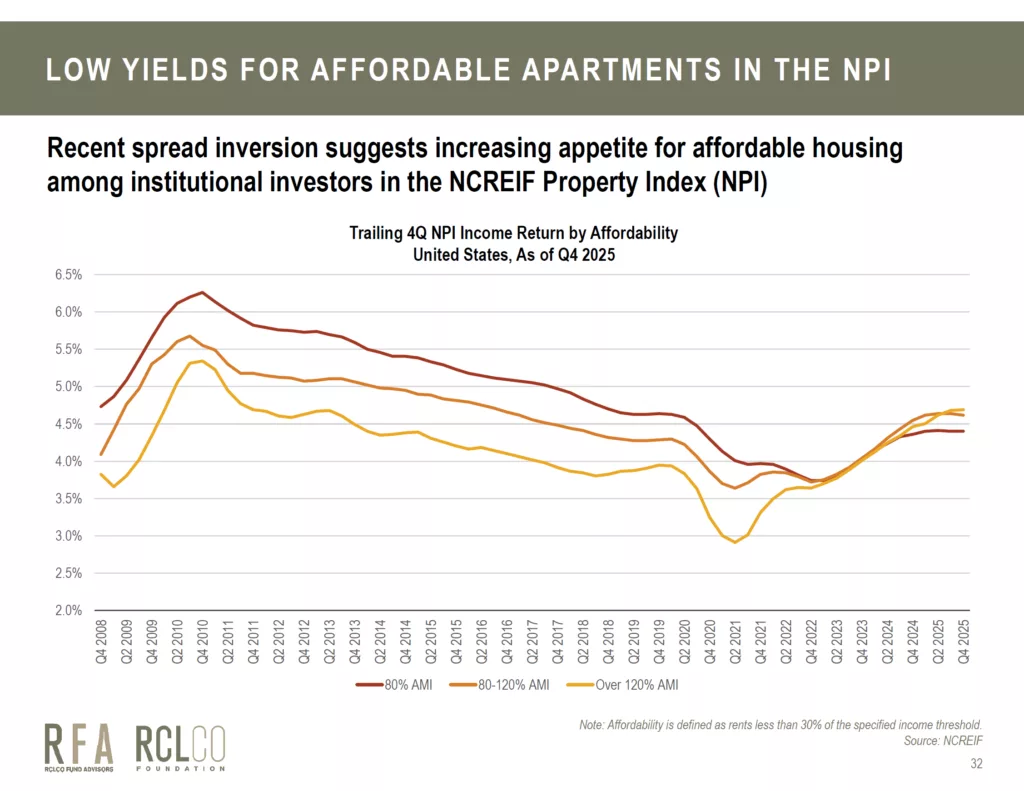
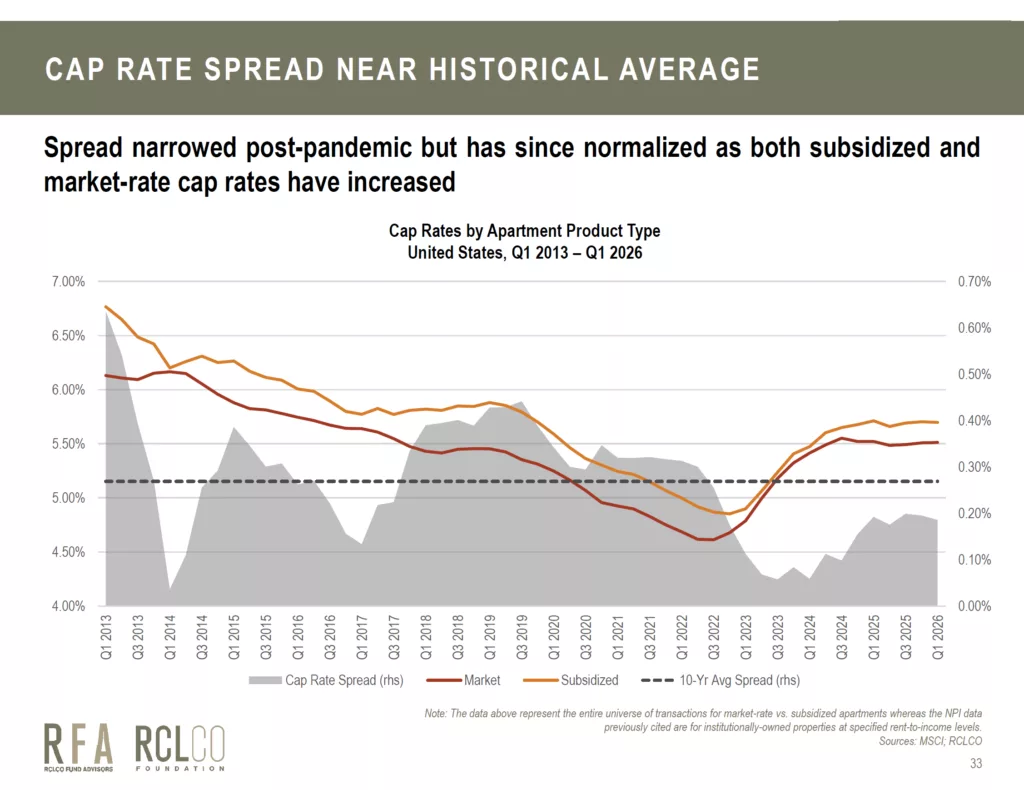
- Cap rates for subsidized apartments are roughly 20 bps above market-rate cap rates, near their longer-term average spread. In the NPI, income yields for institutional affordable housing recently fell below market-rate housing yields, suggesting increased investor interest.
The affordable housing sector is not without risks, and investors and developers should weigh them against the outlined benefits of entering the space.
- Zoning restrictions, high land and construction costs, and competition with value-add investors can make development difficult.
- Federal subsidies can assist with overcoming development hurdles, but subsidies are limited. The ratio of LIHTC applications to credits available is frequently 3:1.1
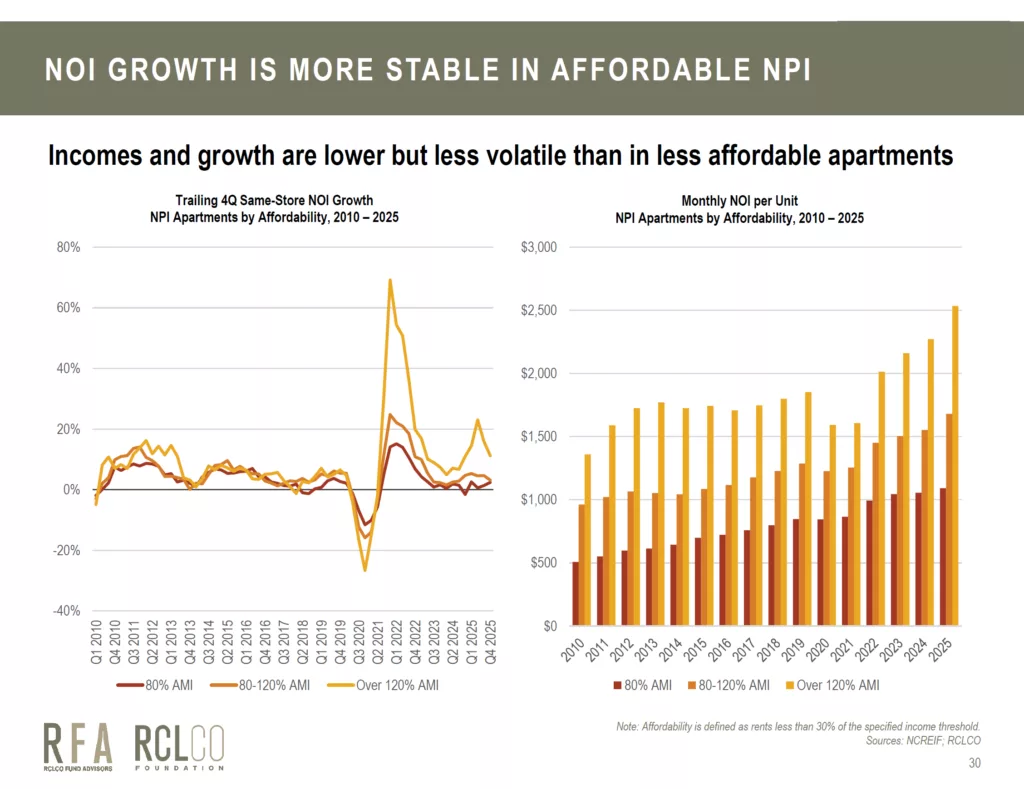
- Lower rents and constrained ability to generate rent increases can impact NOI growth.
- Rising operating costs are an even greater challenge for affordable assets than for conventional apartments given tight margins.
Overview & Purpose
The goal of this report is to support the efforts of affordable housing developers, preservers, operators, and investors—and in turn provide for the growing populations of people who require affordable housing—by making a case for increased deployment of capital into the affordable housing asset class (1).
- The first section provides a basic characterization of the current stock of affordable housing, by sizing and scoping what has been built, who has been involved, and how much has been transacted.
- The second section analyzes the underlying supply and demand dynamics shaping the sector, examining what they mean for the long-term attractiveness of investment in the asset class.
- Finally, the third section summarizes historical performance of the asset class, both operationally and in the capital markets, and compares it to market-rate apartment performance. This section highlights the nature of the asset class’s advantages, emphasizing its stability and diversification benefits.
This report combines takeaways from the existing literature with novel analysis of multiple public and proprietary data sets. The nature and limitation of these sources are outlined on page 8. Collectively, the data sources used present a key challenge, as they rely upon incongruent definitions, sample sizes, and methodologies. However, their distinctive uses also complement each other in telling a fuller story about the characteristics, performance, and prospects of a growing and institutionalizing asset class. The precise source and use of each figure is qualified in footnotes where relevant.
(1) Investors need to independently evaluate all relevant factors prior to making any investment, which includes the risk of potential loss given the uncertainty associated with any form of real estate investing.